

The Impossible
Eulogy for Hunter

August 31, 2020, The day we buried Hunter
Eulogy for Hunter Jackson Jaffe, May 14, 1999 - Aug 28, 2020
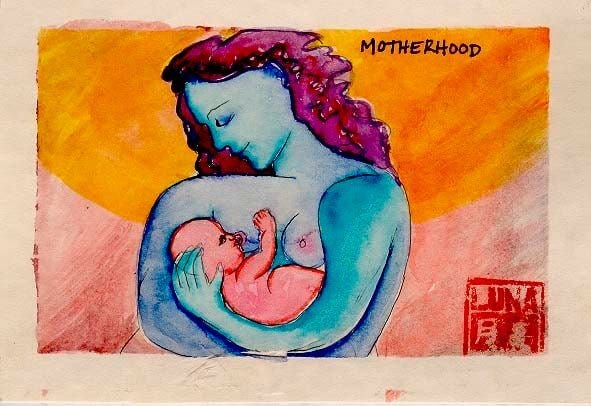
Hunter was born out of my burning desire to be a mother. It was not an easy path to conception. I had to get divorced from my husband, who didn’t want children after all, to begin the journey alone, at thirty-eight years old. After six months of donor inseminations, I met Toni and she became my partner, offering unwavering support and love on the roller coaster of hope and despair. Finally, after a year of hormones and prayers and dogged determination, I was pregnant.
In the ninth month of pregnancy, my belly was enormous. The midwife said I had to be 37 weeks pregnant to give birth at home, which we were deeply committed to. One morning a few days after crossing that milestone, I had a little talk with Hunter: “It’s time sweetie. If you wait much longer, I don’t think I’ll get you out safely.” Minutes after that conversation with him my water broke, and I went into labor. We scrambled to get the birthing tub set up in the room that would become his nursery. Twelve hours later our robust little cherub was welcomed into a circle of love—Toni caught him, and my brother Tim cut the cord.
From the beginning Hunter was an easy child—his smile lit up the room. He was kind, loving, curious, silly, and thoughtful. He attended Jewish preschool and then Portland Jewish Academy until he graduated in eighth grade. We took him to Israel when he was three to be in a dear friend’s wedding—he was the ring bearer. On the day of the wedding, he looked up at me and said, “So, Mom, where’s the bear suit?” He was confused when we showed him a little pillow with the wedding rings on it. He had been looking forward to being a bear!
When Hunter was five years old, he was passionate about fish. We loved our freshwater aquarium. One day we decided to add African dwarf frogs to the mix after listening to the store clerk describe that they were hermaphrodites, both male and female in the same body. As we drove home, Hunter said, “Mom? I think God is a hermaphrodite!” I looked in my rear-view mirror at his serious face and said, “Why is that honey?”— “Because we were created in God's image!” “Yes,” I said, “you’re right and you are so wise.” A boy raised by two Moms apparently wasn't about to think of God as only male. I had a journal where I kept these precious Hunterisms. There were many more over the years.
Hunter came into this world with a deep and tender heart—and it’s not easy being a sensitive boy in our culture. He was the one who would tend to a toddler on the playground when they fell. He would help kids tie their shoes and put on their coats. He listened well and always checked in with me when I was having a difficult day. I would often wake up to him standing by my side of the bed in the dark. Feeling his presence, I would lift the covers to let him crawl in. Hunter was the kind of boy that would see me struggling to groom our standard poodle and ask if I needed a glass of water. At other times he would hold my face in his hands and look so deeply at me, wanting my full attention, then kiss me and run off to a new adventure.
When Hunter was in 5th grade, we discovered that he had ten donor siblings—children who shared the same genetics, literally his half-siblings. That year we went to Los Angeles to meet three of the moms and siblings. He loved getting to know Annie, Tanner, and Derek, and was proud to tell this story to his classmates when he returned. For an only child, having instant brothers and sisters was a dream come true.
We explored the world together—Israel, Europe, Costa Rica, Hawaii, Mexico, a Disney cruise through the Caribbean. When he was twelve, we spent two weeks in Nicaragua volunteering with Orphanage Outreach. We studied Spanish and worked with children in a local preschool, while also experiencing life in a third world country. Hunter was not fond of being hot or trying unfamiliar foods. Yet when we were together, he was brave. He stretched into the discomfort because he understood how good his life was and he wanted to help.
The transition to high school was brutal for Hunter—he was shy and anxious, uncertain how to navigate the cliques and social norms. One of the most heartbreaking things I’ve learned over the past few months as Hunter began to explore the roots of his anxiety, was the extent to which he was bullied beginning in first and second grade. There are so many cruelties children inflict upon each other—being teased for crying or not being into sports or wearing the wrong clothes. These wounds cut deep into his tender heart resulting in withdrawal and a fear of being seen while also increasing his attunement to the suffering of the people around him. I remember a day when Hunter was a sophomore in high school. He had finally found a new group of friends. He was on the phone much longer than usual and when he got off I asked if he was ok. He said, “My friend is having a really hard time and I wanted to stay on the phone until I knew she was safe.” His empathy was deep and difficult because he felt everything and couldn’t tell what was his and what wasn’t. It was his gift and his curse.
We may never know why Hunter died on the cusp of a new life, just a week after returning from treatment. He came home with the sparkle in his eye, his smile broad, his head high. The young man who had been lost in a fog of cannabis was back. He had dreams again. He had plans for his future and was excited to return to school after taking a trip to NYC. He had new friends who loved and honored him, who held him accountable and taught him that he could be himself and have fun without numbing out. He learned that exercise was a key component in reducing anxiety and discovered a love for rock climbing and running.
A few days before he left Arizona, I sent him a long letter and I ended it with the Mary Oliver quote, “Tell me, what is it you will do with your one wild and precious life?” And now, I am left to ask myself that question.
How will I live to honor Hunter, to uplift his memory, to carry his spirit home?
How will I honor my sorrow, live through the agony of this loss, and find ways to grow my capacity to love rather than shrink in despair?
How will I learn to look forward, reaching out my arms to young and old, and find family in a web of love that is vast and wide, on this earth and beyond?
This much I know for sure: Hunter was loved by many. His kindness made a difference. His heart was pure. He wasn’t ready to die.